


Awesome Blog Blog
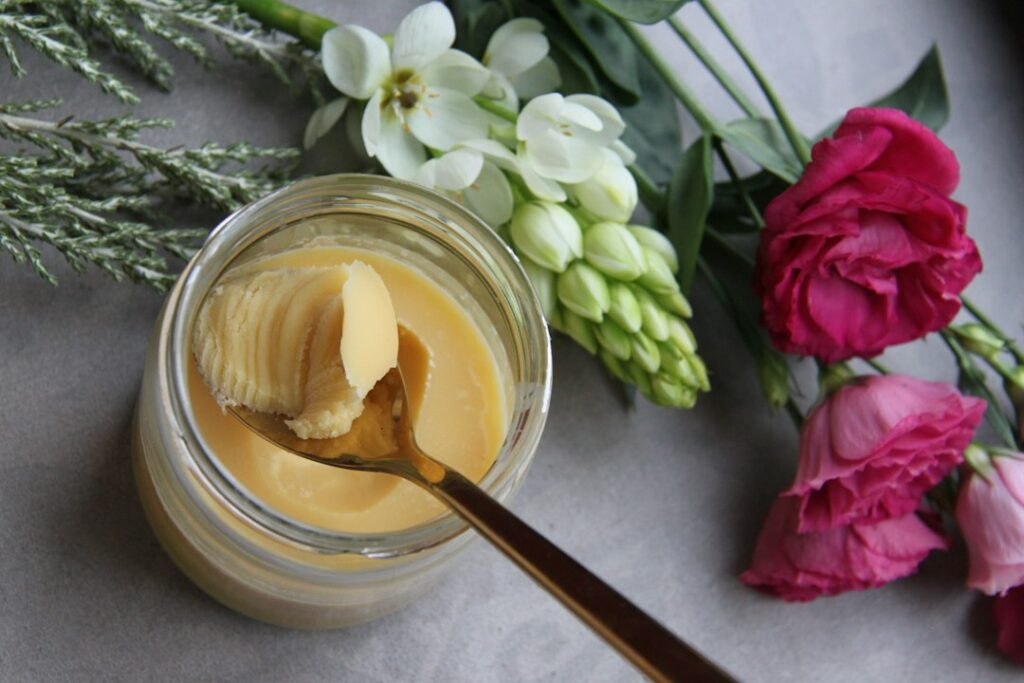
How Much Ghee From 1 Litre Milk? Cow vs Buffalo Yield
6 October, 2026If you are asking how much ghee comes from 1 litre of milk, the answer is controlled mainly by one number: milk fat percentage. Ghee is almost entirely milk fat, so a litre of higher-fat buffalo milk can produce substantially more ghee than a litre of cow or toned milk.
As a practical working range, 1 litre of cow milk usually gives about 30–45 g of ghee, while 1 litre of buffalo milk can give roughly 50–75 g. The exact recovery depends on the milk’s actual fat %, how completely the cream or butter is recovered, and the method used.
Quick answer: ghee yield from 1 litre milk
| Milk type | Typical fat range | Practical ghee yield from 1 litre* | Approx. milk for 1 kg ghee* |
|---|---|---|---|
| Cow milk | 3.2–4.5% | 30–45 g | 23–33 L |
| Buffalo milk | 5.0–8.0% | 48–75 g | 13–21 L |
| Full cream milk | About 6% | 55–60 g | 17–18 L |
| Toned milk | About 3% | 27–30 g | 34–37 L |
*These are practical estimates, not guaranteed yields. They assume good fat recovery and normal processing losses. Actual farm milk can be above or below the stated fat range.
Why fat percentage decides the answer
Ghee is made by concentrating milk fat and removing nearly all water and non-fat milk solids. Under FSSAI standards, ghee must contain at least 99.5% milk fat and not more than 0.5% moisture. That is why SNF, protein and lactose contribute almost nothing to final ghee weight.
For milk sold in India, FSSAI specifies minimum composition standards of 3.2% fat for cow milk and 5.0% fat for buffalo milk. Full cream milk is standardized at 6.0% fat and toned milk at 3.0%. These are minimum regulatory composition values at the point of sale, not a promise that every raw-milk batch will have exactly that fat percentage.
If you want the technical background, see the FSSAI dairy-product standards and the FSSAI standard for ghee and milk fat.
A simple formula to estimate ghee yield
For a quick dairy calculation, use:
Ghee yield (g) ≈ Milk quantity (L) × milk density × fat % × fat recovery ÷ ghee fat fraction × 1000
For routine estimation, milk density can be taken around 1.03 kg/L, ghee fat fraction around 0.995, and a realistic fat recovery of about 90–95% depending on the process.
Example: cow milk at 4.0% fat
With 1 litre milk, 4.0% fat and 92% fat recovery:
1 × 1.03 × 0.04 × 0.92 ÷ 0.995 ≈ 0.038 kg
That is about 38 g of ghee.
Example: buffalo milk at 7.0% fat
Using the same recovery assumption:
1 × 1.03 × 0.07 × 0.92 ÷ 0.995 ≈ 0.067 kg
That is about 67 g of ghee.
This is why two households can start with the same 10 litres of milk and get very different amounts of ghee.
How much cow milk is needed for 1 kg ghee?
For cow milk in the common 3.5–4.5% fat range, a realistic expectation is roughly 23–30 litres of milk for 1 kg of ghee. Milk closer to the regulatory minimum of 3.2% fat can require more.
The often-repeated statement that “25 litres of cow milk makes 1 kg ghee” is therefore a useful rule of thumb, but not a fixed dairy-science constant.
How much buffalo milk is needed for 1 kg ghee?
Buffalo milk contains more fat, so the milk requirement falls sharply. At around 6–8% fat, approximately 13–18 litres can produce 1 kg of ghee with efficient recovery. Lower-fat buffalo milk may require closer to 20 litres.
For a deeper comparison of the two milks, see our guide to cow milk vs buffalo milk.
Does bilona ghee need more milk?
Often, yes. In the traditional bilona route, milk is converted to curd, the curd is churned to recover makhan, and the butter is then clarified into ghee. Every separation stage can leave a little fat behind in buttermilk, utensils and processing residues.
A modern cream-separation route can recover milk fat more efficiently, so it may produce more finished ghee from the same fat input. The underlying limit, however, does not change: you cannot recover more milk fat than the milk actually contains.
This also explains why claims such as “30 litres of milk are always required for bilona ghee” should be treated as process-specific estimates rather than universal rules.
Does A2 milk produce more ghee?
Not automatically. A2 refers to the beta-casein protein variant. Ghee yield is driven primarily by fat percentage and fat recovery, not by whether the milk is A1 or A2.
An A2 cow from a high-fat breed may give more ghee than lower-fat milk, but that is because of its fat content, not because A2 beta-casein itself creates more fat. Our A2 milk vs regular milk guide explains that distinction in more detail.
Why home ghee yield changes from batch to batch
1. Milk fat varies. Breed, feed, season, stage of lactation and animal health can all change milk fat.
2. Cream collection is incomplete. When malai is skimmed manually, some fat remains in the milk.
3. Churning losses occur. Traditional butter recovery is rarely 100% efficient.
4. Heating method matters. Overheating can increase residue formation and make handling losses worse, even though the fat itself is not simply “evaporating away.”
5. Butter moisture varies. If you are estimating ghee from butter rather than milk, the water content of butter changes the final recovery.
6. Measurement by volume can mislead. For process costing, compare ghee in kilograms rather than litres because volume changes with temperature and physical state.
Full cream milk vs toned milk for making ghee
If your only objective is ghee recovery, higher-fat milk wins. Full cream milk at about 6% fat can theoretically give roughly twice the ghee of toned milk at about 3% fat from the same volume.
That does not automatically mean full cream milk is cheaper per kilogram of ghee. The correct commercial comparison is cost per kilogram of fat purchased, not simply price per litre of milk.
For the composition differences, see full cream vs toned vs double toned vs skimmed milk.
What happens to the rest of the milk?
Making ghee does not mean the other 90-plus percent of the milk disappears. In a dairy plant, separating cream leaves skim milk containing most of the original protein, lactose, minerals and SNF. That skim can be sold as liquid milk or converted into products such as skim milk powder, casein or other ingredients.
This is commercially important. A dairy should not calculate ghee cost by charging the full cost of whole milk only to the ghee and ignoring the value of the skim stream. Proper milk-fat and SNF accounting gives a much more realistic product cost.
Ghee yield calculator: quick working values
| Milk quantity | Cow milk at ~4% fat | Buffalo milk at ~7% fat |
|---|---|---|
| 1 litre | ~38 g | ~67 g |
| 5 litres | ~190 g | ~335 g |
| 10 litres | ~380 g | ~670 g |
| 25 litres | ~950 g | ~1.68 kg |
Working example assumes about 92% fat recovery and is intended for estimation. Test the actual fat % of your milk for an accurate plant or farm calculation.
Frequently asked questions
How much ghee can I get from 1 litre cow milk?
Usually around 30–45 g, depending mainly on fat percentage and how efficiently the fat is recovered.
How much ghee can I get from 1 litre buffalo milk?
Roughly 50–75 g is a practical range for buffalo milk, although richer milk can give more.
How many litres of milk are needed for 1 kg ghee?
As a working range, expect about 23–30 litres of cow milk or 13–18 litres of higher-fat buffalo milk. Lower-fat milk and less-efficient traditional recovery increase the requirement.
Can 10 litres of milk make 1 kg ghee?
Normally no. Ten litres of ordinary cow or buffalo milk do not contain enough fat to make 1 kg of pure ghee.
Which milk gives the highest ghee yield?
The milk with the higher tested fat percentage. In normal Indian dairy practice, buffalo milk usually gives a higher ghee yield per litre than cow milk.
Is ghee yield better calculated in litres or kilograms?
Use kilograms for commercial calculation. Ghee volume changes with temperature, while mass gives a more reliable yield and costing basis.
Bottom line
For a quick answer, 1 litre of cow milk gives roughly 30–45 g ghee and 1 litre of buffalo milk roughly 50–75 g. If you know the actual milk fat %, you can estimate yield much more accurately than by relying on a fixed “litres of milk per kg ghee” rule.
If you are comparing ghee with butter for cooking or nutrition, read our ghee vs butter guide.
Featured image credit: Megumi Nachev / Unsplash.