


Awesome Blog Blog
Ghee vs Butter: Nutrition, Smoke Point, Cooking Uses & Which to Choose
25 September, 2026Ghee vs butter is a common kitchen question, especially in India where both are used for everyday cooking, baking, tadka and traditional foods. They start from the same dairy source, but they behave differently because ghee is made by removing almost all of the water and milk solids from butter.
If you are choosing between them, the most useful differences are not marketing claims but fat concentration, heat tolerance, flavour, lactose/milk-protein content and storage. Here is a practical, evidence-based comparison.
Ghee vs butter: the quick answer
Choose ghee when you want a higher-heat cooking fat, a nutty dairy flavour and longer shelf stability. Choose butter when you want a creamy flavour, spreading, baking performance or the specific browning behaviour of milk solids.
Neither is automatically “healthier” in every situation. Both are calorie-dense dairy fats and both contribute saturated fat, so serving size and your overall diet matter more than the label alone.
What is the difference between ghee and butter?
Butter is a water-in-oil dairy emulsion made from milk or cream. Under Indian food standards, table butter contains at least 80% milk fat and can contain up to 16% moisture. Ghee is a milk-fat product made by heating butter, cream or other milk-derived material so that nearly all water and most non-fat milk solids are removed. FSSAI standards specify at least 99.5% milk fat and no more than 0.5% moisture for ghee.
That processing step explains most of the practical differences between the two.
| Factor | Ghee | Butter |
|---|---|---|
| Typical fat concentration | About 99.5%+ milk fat under FSSAI standard | At least 80% milk fat for table butter under FSSAI standard |
| Water content | Very low | Higher; up to about 16% in table butter |
| Milk solids | Mostly removed during clarification | Present |
| Heat tolerance | Generally higher | Lower because milk solids brown and scorch sooner |
| Flavour | Nutty, roasted, rich | Creamy, milky, sweet |
| Best uses | Tadka, sautéing, roasting, higher-heat cooking | Baking, spreading, sauces, low-to-medium heat cooking |
| Storage | More shelf-stable because moisture is very low | Usually needs refrigeration after purchase/opening as directed on pack |
Ghee vs butter nutrition: calories and fat
Ghee is more concentrated because almost all of its water has been removed. In practical terms, a spoon of ghee usually provides a little more fat and energy than the same spoonful of butter.
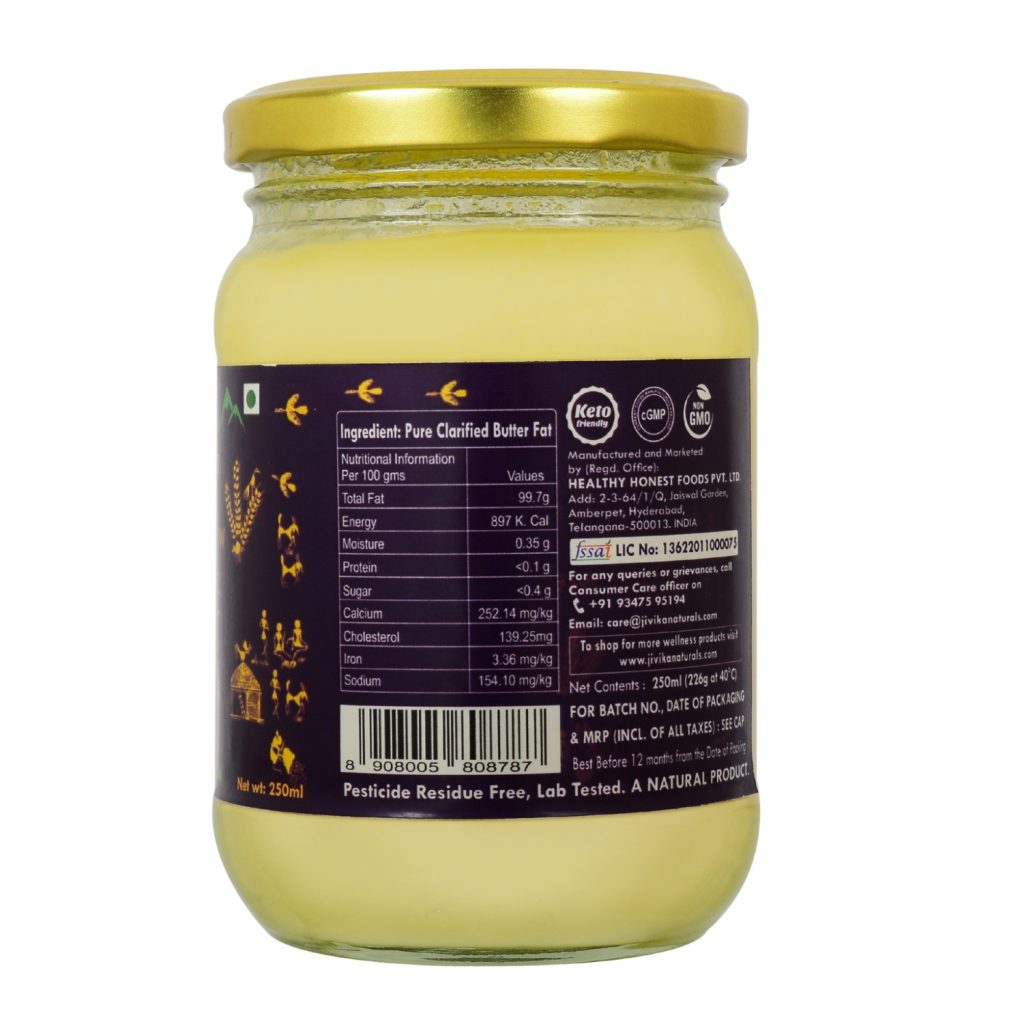
For reference, USDA FoodData Central lists unsalted butter at roughly 717 kcal and 81 g of fat per 100 g. Ghee is almost entirely milk fat, so its energy density is closer to that of pure fat. Exact nutrition values vary by brand and serving size, so the pack nutrition panel is the best source for a specific product.
The key point is simple: both are concentrated fats. If your goal is calorie control, measure the amount you use rather than assuming one is a “free” or low-calorie option.
Which has the higher smoke point?
Ghee generally tolerates higher cooking temperatures than butter because the milk solids that brown and burn first have been removed. Published cooking references commonly place ghee’s smoke point around 230–250°C, while butter begins to smoke or scorch at lower temperatures, often around 150–175°C depending on the product and method.
Smoke point values are approximate and can vary with purity, free fatty acids, salt and processing. The practical takeaway is more useful than a single number:
- For tadka, bhuna, pan-frying and higher-heat sautéing: ghee is usually the better fit.
- For baking, toast, sauces and flavour finishing: butter often works better.
- For brown butter: butter is required because its milk solids create the characteristic toasted flavour.
Does ghee contain lactose or milk protein?
Clarification removes most of the water-soluble and non-fat milk components, so properly made ghee contains far less lactose and milk protein than ordinary butter. Many people with lactose intolerance therefore find ghee easier to tolerate.
However, ghee should not automatically be treated as safe for a diagnosed milk-protein allergy. Trace milk proteins can remain depending on manufacturing and filtration. If you have a true milk allergy, use the product label and medical advice rather than assuming all ghee is allergen-free.
Is ghee healthier than butter?
There is no universal winner. The answer depends on what you mean by “healthier.” Ghee offers higher heat tolerance and lower moisture, while butter provides the culinary properties needed for many baked goods and sauces. Nutritionally, both are dairy fats and both contain significant saturated fat.
The American Heart Association recommends limiting saturated fat as part of an overall heart-healthy eating pattern. That means the most important habit is to watch total quantity and overall dietary pattern, not to treat either ghee or butter as a health supplement.
If you regularly use ghee or butter, a useful approach is to use the amount needed for flavour and cooking performance, while getting most of your dietary fats from a varied mix of foods.
Ghee vs butter for Indian cooking
For many Indian dishes, ghee has a practical advantage because it handles heat well and adds a distinctive aroma. It works especially well for:
- dal tadka and tempering spices
- khichdi, pulao and biryani finishing
- paratha and roti finishing
- halwa and traditional sweets
- pan-roasting spices
- shallow frying where a dairy flavour is desired
Butter is often the better choice for:
- pav bhaji and butter-forward gravies
- toast and sandwiches
- cookies, cakes and pastry
- makhani-style finishing
- white sauces and emulsified sauces
- recipes where milk-solid browning is part of the flavour
Which is better for weight management?
Neither has a built-in weight-loss advantage. Ghee is more concentrated fat, while butter contains more water. The practical difference comes down to portion size and the rest of the meal.
If you are managing calorie intake, use a teaspoon or measured spoon rather than pouring freely. This lets you keep the flavour while making the quantity visible.
Storage: does ghee last longer than butter?
Yes, generally. Ghee’s very low moisture makes it more shelf-stable than butter. A clean, dry spoon and a tightly closed container help protect it from moisture, odours and contamination.
Still, storage instructions can vary by brand and packaging. Follow the label, especially after opening. Butter generally requires refrigeration to maintain quality and limit spoilage.
How to choose good ghee or butter in India
When buying packaged dairy fat, look beyond front-label claims. Check:
- Ingredient list: the product should match what you are trying to buy.
- Nutrition panel: compare fat, saturated fat and serving size.
- FSSAI licence details: packaged food should carry the required food-business information.
- Pack integrity: avoid damaged, leaking or poorly sealed packs.
- Manufacture and best-before dates: fresher stock generally gives better flavour quality.
- Storage directions: follow the manufacturer’s instructions after opening.
You can browse the ghee range on Awesome Dairy or compare it with the butter range to see the different formats and brands available.
Frequently asked questions
Can I replace butter with ghee in a recipe?
For frying, sautéing and many savoury dishes, usually yes. In baking, the swap is not always 1:1 because butter contains water and milk solids that affect texture, spread and browning. Use a recipe designed for ghee when precision matters.
Is ghee lactose-free?
Ghee contains much less lactose than butter because most milk solids are removed. However, trace residues can remain, so people with severe intolerance or milk allergy should check the product and seek individual medical guidance.
Is ghee better than butter for high-heat cooking?
Usually yes. Ghee has most of the milk solids removed, so it generally withstands higher cooking temperatures before smoking or scorching.
Which has more calories: ghee or butter?
Gram for gram, ghee generally has more calories because it is almost pure fat, while butter still contains water. The difference is modest at small serving sizes but becomes meaningful if large quantities are used.
Is A2 ghee automatically healthier than regular ghee?
A2 refers to a type of beta-casein protein in milk. Because ghee is almost entirely milk fat and contains very little protein, an A2 label by itself should not be used as proof of a major nutritional advantage. Purity, processing quality, flavour and the amount consumed remain important.
Bottom line
In the ghee vs butter comparison, ghee is the more practical choice for higher-heat Indian cooking and longer shelf stability, while butter is better for baking, spreading and recipes that depend on milk solids. For nutrition, both are rich dairy fats, so the best choice is the one that suits the recipe and is used in a sensible quantity.
If you enjoy learning how dairy products differ, you may also like our guide on cheese nutrition and benefits and our explainer on UHT milk and tetra pack safety.
Sources
- Food Safety and Standards Authority of India (FSSAI): standards for milk fat products and ghee
- USDA FoodData Central: butter, without salt
- American Heart Association: saturated fat guidance
Editorial note: Nutrition values and smoke points can vary by product and processing method. This article is general food information and is not medical advice.